Why Consumer-Led Innovation Must Power the Next Phase
15 July 2026
The pandemic exposed vulnerabilities in supply, routines and trust, prompting an awakening where consumers grew more conscious, vocal and experimental,…
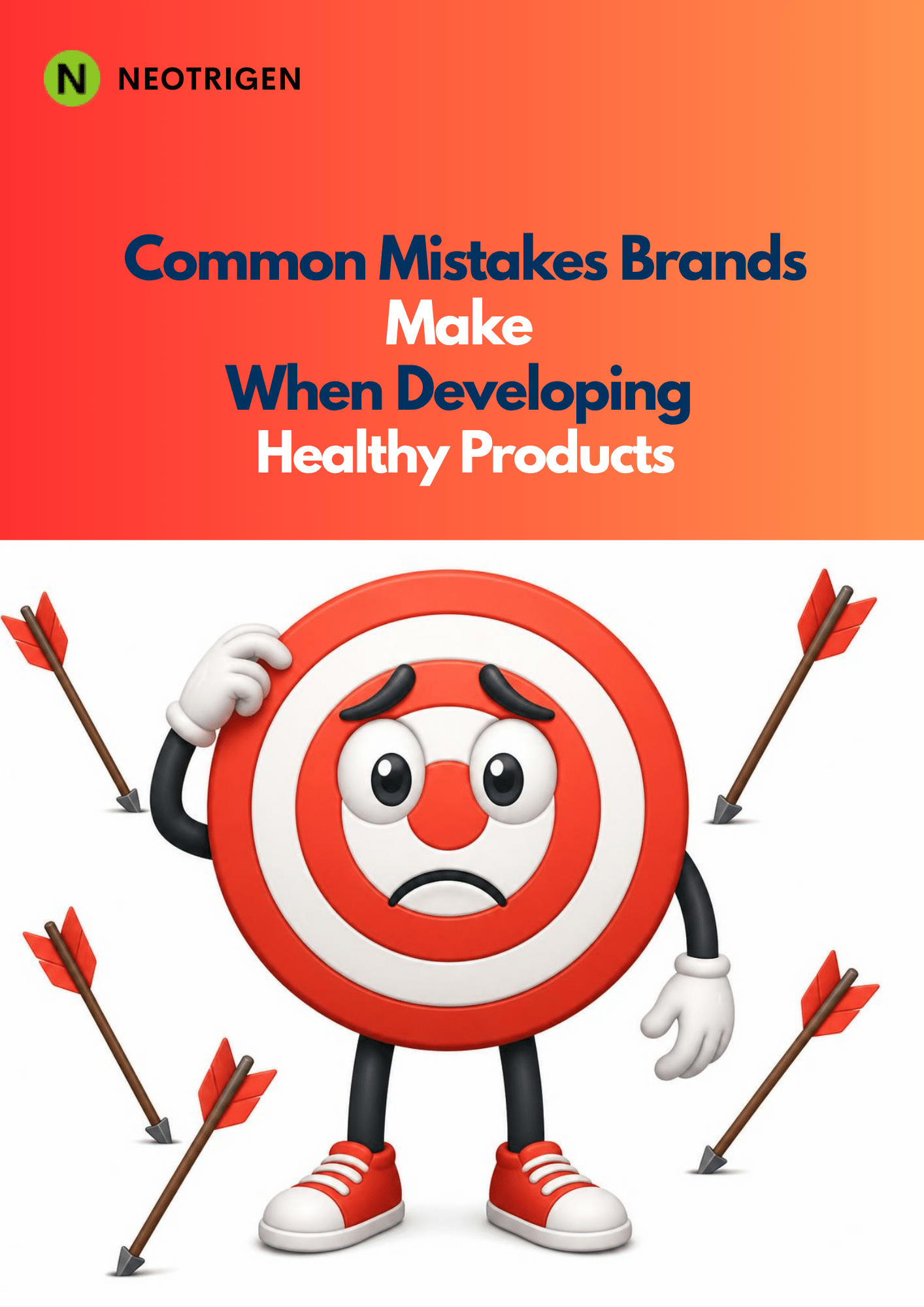
Launching a healthy food or beverage product feels straightforward on paper: identify a nutrition trend, reformulate a recipe, print “healthy” on the label, and wait for sales to roll in. In reality, most healthy product launches underperform or fail outright, and the reasons rarely have anything to do with the quality of the ingredients.
The real problem is usually a gap between what a brand thinks consumers want and what they actually buy. That gap is where sound healthy product development insights become essential insights that come from real consumer feedback, where purchase intent is converted into actual sales.
At NEOTRIGEN, we work with food and nutrition businesses across Denmark to partner with you and go beyond to close that gap between consumer and their consumption of food and drink: through consumer research, taste testing, and behavioural nudging. Along the way, we’ve seen the same mistakes repeat themselves across brands, categories, and markets. Here’s what goes wrong, and how to avoid it.
Health-focused products are held to a higher standard than conventional food and beverage items. Consumers expect them to taste good, deliver a functional benefit, fit their lifestyle, and justify a premium price all at once. Missing any one of these expectations is often enough to sink a launch.
Understanding this pressure is the first step toward avoiding the mistakes below.
The single most common misstep in healthy product development is assuming that “healthy” is a strong enough selling point to overcome poor taste.
Taste testing early in development not after the formula is locked prevents brands from discovering a flavor problem only after the product hits shelves.
Many brands develop healthy products based on internal opinions, competitor benchmarking, or general market trend reports. These sources are useful for direction, but they cannot replace direct consumer input.
Without structured feedback, brands miss:
Live taste tests and virtual focus groups, gathered directly from your target audience, surface these issues while there’s still time to adjust the product.
Not every health trend applies to every audience, and trends move faster than most product development timelines. A brand that builds an 18-month launch plan around a trend that peaked a year earlier is set up to miss the window entirely.
Trend exploration interviews with real consumers rather than relying solely on industry reports help brands separate trends with staying power from short-lived fads before committing budget to a full rollout.
A product can be nutritionally excellent and still fail if the packaging sends the wrong signal. Common packaging mistakes include:
Since packaging is often the only “trial” a shopper gets before purchase, testing it with real consumers through virtual focus groups or panel discussions is just as important as testing the product itself.
A product can perform well in a controlled test and still underperform at home. Brands frequently overlook:
Video diaries, where consumers document meals and product use over time, reveal these real-world usage patterns far more reliably than a single-session survey.
Even a well-developed product needs the right nudge to become a habit. Brands that ignore behavioural science often assume consumers will rationally choose the healthier option, when in reality, small friction points like unclear instructions, an unfamiliar taste, or inconvenient packaging quietly kill repeat purchases.
Applying behavioural nudging principles during development, not as an afterthought in marketing, helps healthy products earn a permanent place in a consumer’s routine.
Perhaps the biggest mistake is treating consumer research as a single checkpoint rather than an ongoing process. Consumer preferences shift, competitors launch new alternatives, and initial feedback often only scratches the surface.
A stronger approach combines multiple research formats over the course of development:
This layered approach is exactly how NEOTRIGEN helps food and beverage brands validate ideas before launch, refine formulas mid-development, and confirm market fit before scaling.
Avoiding these pitfalls comes down to one principle: let real consumer data guide decisions, not internal assumptions. Practically, that means:
Healthy product development doesn’t have to be a guessing game. With the right consumer insights, behavioural nudging strategies, and structured taste testing, food and beverage brands can build products people genuinely want to buy again and again.
NEOTRIGEN partners with food and nutrition businesses to turn consumer behavior into a clear product strategy from early-stage taste tests to full trend validation. If you’re developing a healthier product and want to avoid the mistakes above, book a call with our team or explore our research services to see how tailored consumer insights can strengthen your next launch.
📞 Call to discuss your product development goals.
1. What are the most common mistakes brands make when developing healthy products? The most frequent mistakes include prioritising nutrition over taste, skipping direct consumer feedback, misreading health trends, ignoring packaging perception, and treating research as a one-time step instead of an ongoing process.
2. Why do healthy products often fail even with good ingredients? Good ingredients alone don’t guarantee success. If the taste, packaging, or overall experience doesn’t match consumer expectations, the product will struggle regardless of its nutritional profile.
3. How important is taste testing in healthy product development? Taste testing is critical. Consumers may purchase a healthy product once, but repeat purchases depend almost entirely on flavor. Testing early prevents costly reformulations later in development.
4. What is behavioural nudging in food product development? Behavioural nudging applies principles from behavioral science to guide consumer choices, such as adjusting packaging cues, product convenience, or messaging so a healthier option becomes the easier, more natural choice.
5. How can brands validate a health trend before investing in a new product? Brands can validate trends through direct consumer research, such as trend exploration interviews, rather than relying solely on industry reports. This confirms whether a trend genuinely matters to the target audience.
6. What types of consumer research help during healthy product development? Effective methods include live taste tests, virtual focus groups, video diaries, recorded taste tests, and online panel discussions each offering different depth and speed of insight depending on the development stage.
7. How often should brands conduct consumer research during product development? Research should be continuous rather than a single checkpoint. Testing at multiple stages concept, formulation, packaging, and post-launch helps brands adapt to shifting consumer preferences.
8. How does NEOTRIGEN help brands with healthy product development? NEOTRIGEN provides consumer insights, taste testing, and behavioural nudging services for food and beverage brands, helping them validate ideas, refine products, and launch with confidence based on real consumer data.