Initial Steps for Knowing Your Consumer
14 July 2026
Every food or beverage brand eventually reaches the same crossroads: someone hands you the job of "understanding the consumer," and…
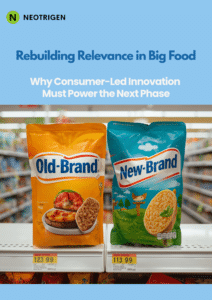
Big food companies built their empires on scale, distribution muscle, and decades of brand recognition. But recognition is no longer the same as relevance. Today’s shoppers are walking past household names and reaching for smaller, newer brands that feel more honest, more transparent, and more aligned with how they actually want to eat. Rebuilding relevance in big food has become the defining challenge for legacy manufacturers who once assumed shelf space alone guaranteed loyalty.
This shift isn’t a passing trend. It’s a structural change in how people evaluate food, and it demands a structural response from the companies that dominate the category.
Legacy food brands didn’t lose their audience and relevance overnight. The erosion happened gradually, through a thousand small moments where a challenger brand felt more trustworthy than the familiar box on the shelf.
Consumers increasingly question long ingredient lists, unfamiliar additives, and marketing claims that feel disconnected from the product inside the package. When a brand’s messaging doesn’t match what’s printed on the back label, shoppers notice and they remember.
Smaller companies don’t carry the weight of legacy supply chains, outdated formulations, or slow-moving approval processes. They can reformulate, rebrand, and respond to consumer sentiment in months, not years. That agility has let them capture attention in categories big food once owned outright.
As Neotrigen’s research on brands communicate ingredients, consumers decide on perception shows, a product can be nutritionally sound and still lose the sale if it feels processed, artificial, or out of step with current values. That same perception gap shapes what consumers believe about a brand and how a product fits into their daily routines.
Relevance isn’t rebuilt through a new tagline or a redesigned label alone. It requires a genuine realignment between what a brand says, what it sells, and what today’s consumer actually values.
Shoppers are reading labels more critically than ever. Rebuilding trust means:
Big food often markets to a demographic. Relevant brands market to a mindset. Understanding whether a shopper is driven by health, convenience, indulgence, or identity allows a brand to speak to the actual decision being made in the aisle, not a generic persona built from outdated research. This starts with the initial steps for knowing your consumer or customer and a clear framework to understand your F&B consumer.
Heritage brands hold something challenger brands don’t: decades of recognition and trust built over generations. The goal isn’t to erase that equity it’s to modernize the product experience while keeping the emotional core that made the brand a household name in the first place. This balance matters even more given how often health-focused food brands struggle despite having good products simply because the rest of the brand experience hasn’t caught up.
Before a consumer reads a single word on packaging, color, shape, and overall product design aesthetics have already shaped a shopper’s first impression. Brands rebuilding relevance need packaging that visually signals the values they claim to hold, not packaging that contradicts the message inside a theme explored across Neotrigen’s full series on consumer personalities and visual cues in food choices.
A brand that talks about clean ingredients but advertises with outdated, artificial-feeling imagery sends mixed signals. Relevance is rebuilt through consistency in product, packaging, advertising, and even in how customer questions are answered.
Big food companies that delay this work face a compounding problem. Every year a legacy brand relies on past recognition instead of present-day relevance, a new generation of shoppers forms their food habits around competitors instead. Loyalty that once passed from parent to child is now up for grabs in every single grocery trip.
The brands that treat this as a marketing refresh rather than a strategic priority will continue losing shelf share to smaller, faster-moving competitors even if their products are, on paper, comparable or better. In many cases, this disconnect is also tied to the biggest operational leak in F&B business: teams keep investing in products without investing equally in understanding the consumer buying them.
Forward-thinking food companies are already shifting their approach in several concrete ways:
This is the pattern behind every successful relevance turnaround: alignment between what the company says and what the company actually does. Getting there consistently relies on strong research foundations from understanding the power of consumer insights to using video-based consumer insights to improve healthy product development, and increasingly, knowing why generative AI still needs human experts in consumer insights rather than replacing them.
What does “rebuilding relevance” mean for a food brand? It means realigning a brand’s product, messaging, and packaging with current consumer values particularly around ingredient transparency, health perception, and trust rather than relying solely on past brand recognition.
Why are consumers turning away from big food brands? Many consumers feel that legacy brands’ ingredients, marketing claims, and packaging no longer reflect how they want to eat. Smaller, newer brands have filled that gap with simpler formulations and more direct communication.
Can heritage and modernization coexist in a food brand? Yes. The most successful legacy brands keep the emotional trust built over decades while updating formulations, packaging, and messaging to match current consumer expectations.
How important is packaging design in rebuilding brand relevance? Very important. Visual cues like color and design shape a shopper’s first impression before they read any ingredient information, so packaging needs to visually match the brand’s stated values.
Do reformulated products actually change consumer perception? Reformulation helps, but only when paired with clear communication. A better product with the same confusing marketing will still struggle to shift perception.
Is this shift only relevant to large food companies? No. While the pressure is most visible in big food due to their scale and legacy positioning, any food brand large or small needs to maintain alignment between product reality and consumer trust to stay relevant.
How long does it typically take to rebuild brand relevance? There’s no fixed timeline, but meaningful shifts in consumer perception typically take sustained effort across multiple product cycles, not a single campaign or packaging refresh.
Rebuilding relevance in big food isn’t about chasing every new trend or discarding decades of brand equity. It’s about closing the gap between what a brand promises and what a consumer actually experiences in the ingredients, the packaging, and every touchpoint in between. The companies that treat this as an ongoing commitment, rather than a one-time campaign, will be the ones still relevant to shoppers a decade from now.
If your brand is ready to close that gap, start with a clear-eyed look at how your product, packaging, and messaging are perceived today and build from there.
Slides below:
Rebuilding relevance in Big Food by Sheena